- English
- Español
- Português
- русский
- Français
- 日本語
- Deutsch
- tiếng Việt
- Italiano
- Nederlands
- ภาษาไทย
- Polski
- 한국어
- Svenska
- magyar
- Malay
- বাংলা ভাষার
- Dansk
- Suomi
- हिन्दी
- Pilipino
- Türkçe
- Gaeilge
- العربية
- Indonesia
- Norsk
- تمل
- český
- ελληνικά
- український
- Javanese
- فارسی
- தமிழ்
- తెలుగు
- नेपाली
- Burmese
- български
- ລາວ
- Latine
- Қазақша
- Euskal
- Azərbaycan
- Slovenský jazyk
- Македонски
- Lietuvos
- Eesti Keel
- Română
- Slovenski
- मराठी
- Srpski језик

What Are the Key Differences Between gPV Fuses and Standard DC Fuses
If you’re managing a solar power system, you’ve likely encountered the critical question of circuit protection. Not all fuses are created equal, and using the wrong type can lead to inefficiency, safety risks, or costly failures. A common point of confusion lies in understanding the distinction between a specialized Solar gPV Fuse and a standard DC fuse. As experts in the field, we at Yinrong often address this directly with our clients, emphasizing that the right protection is foundational to system integrity and longevity.
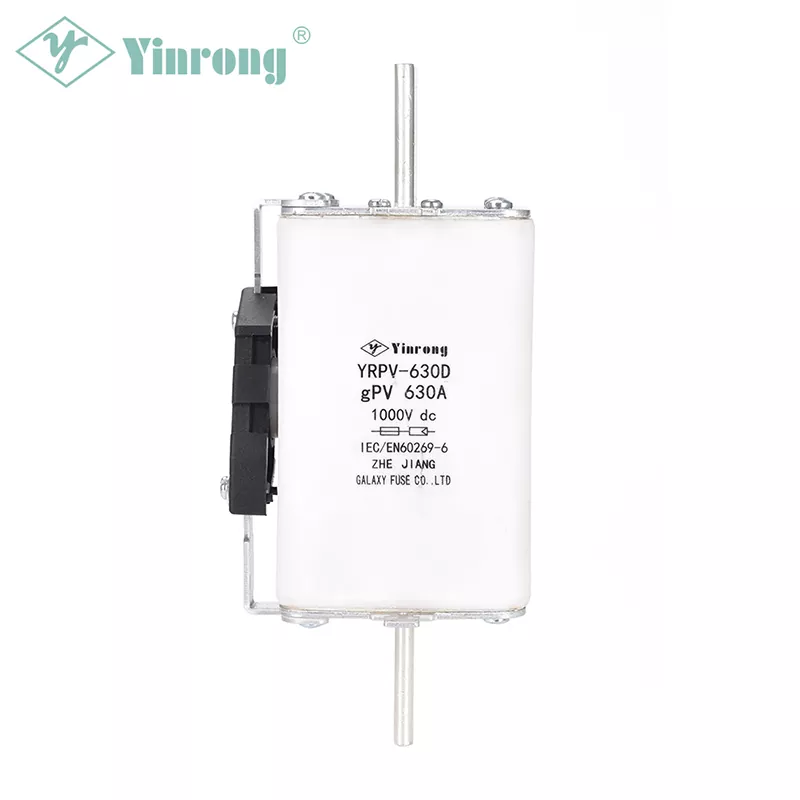
Why Can’t I Just Use Any DC Fuse for My Solar Array
Many assume a fuse is just a fuse. However, standard DC fuses are designed for general direct current applications, like battery circuits or automotive use. They often lack the specific performance characteristics needed for photovoltaic (PV) systems, which experience unique stress factors. Solar arrays operate in harsh environments with wide temperature swings and generate specific types of high-energy fault currents. A standard DC fuse might not safely interrupt these sustained arcs, posing a significant fire risk. This is precisely where the purpose-built Solar gPV Fuse comes into play, engineered from the ground up for the photovoltaic environment.
What Specific Parameters Make a gPV Fuse Superior for Solar Applications
The superiority of a Solar gPV Fuse lies in its tailored technical parameters. At Yinrong, our design philosophy focuses on solving these precise client pain points. Let’s break down the key differentiating features in a clear, professional format.
-
Higher Voltage Ratings: gPV fuses are rated for the high DC voltages common in string and combiner boxes (e.g., up to 1500VDC), whereas many standard DC fuses max out at lower voltages.
-
Special Arc-Extinguishing Capability: They contain materials and structures designed to quench the powerful DC arcs generated during a fault in PV circuits.
-
Enhanced Temperature Durability: They are tested to perform reliably across the extreme temperature ranges (-40°C to +90°C) that solar equipment endures.
-
PV-Specific Certification: True gPV fuses carry certifications like IEC 60269-6 or UL 248-19, specifically for photovoltaic applications.
To illustrate the contrast, consider the following comparison table based on Yinrong's product data:
| Feature | Standard DC Fuse | Yinrong Solar gPV Fuse |
|---|---|---|
| Primary Standard | General DC requirements (e.g., IEC 60269-1) | IEC 60269-6 / UL 248-19 (PV-Specific) |
| Voltage Rating | Typically up to 500VDC or 1000VDC | Up to 1500VDC |
| Breaking Capacity | Suitable for general DC fault levels | Very High (20kA+) for high-energy PV faults |
| Temperature Handling | Standard industrial range | Extended Range (-40°C to +90°C) |
| Application Focus | Battery systems, general electronics | Photovoltaic Strings & Combiner Boxes |
How Does Choosing a gPV Fuse Protect My Investment
The choice directly impacts your system's safety and return on investment. A substandard fuse can fail to interrupt a fault, leading to catastrophic damage to inverters, wiring, and modules. By specifying a certified Solar gPV Fuse, you ensure that in the event of a fault, the component will act predictably and safely, isolating the problem and preventing it from cascading. This protection is non-negotiable for both residential and utility-scale projects. Our engineers at Yinrong consistently see that robust protection with the correct Solar gPV Fuse minimizes downtime and maximizes system lifespan, directly safeguarding your capital.
Where Can I Find Reliable gPV Fuse Solutions
Navigating technical specifications can be daunting. This is why partnering with a dedicated manufacturer matters. At Yinrong, we don’t just sell components; we provide engineered safety solutions. Our product lineup is the result of deep research into real-world solar installation challenges. We invite you to explore our technical resources and product sheets to see how our commitment to quality and innovation translates into tangible reliability for your projects. Choosing Yinrong means selecting a partner committed to the highest standards of photovoltaic protection.
Understanding these differences is the first step toward a safer, more robust solar installation. We hope this clarity empowers your decision-making. If you have specific project requirements or need further technical guidance on integrating the correct Solar gPV Fuse, our team is ready to assist. Contact us today with your questions or request a detailed product catalog—let’s build a safer solar future together.