- English
- Español
- Português
- русский
- Français
- 日本語
- Deutsch
- tiếng Việt
- Italiano
- Nederlands
- ภาษาไทย
- Polski
- 한국어
- Svenska
- magyar
- Malay
- বাংলা ভাষার
- Dansk
- Suomi
- हिन्दी
- Pilipino
- Türkçe
- Gaeilge
- العربية
- Indonesia
- Norsk
- تمل
- český
- ελληνικά
- український
- Javanese
- فارسی
- தமிழ்
- తెలుగు
- नेपाली
- Burmese
- български
- ລາວ
- Latine
- Қазақша
- Euskal
- Azərbaycan
- Slovenský jazyk
- Македонски
- Lietuvos
- Eesti Keel
- Română
- Slovenski
- मराठी
- Srpski језик

How Does an EV and HEV Power Fuse Ensure Safety and Performance in Modern Electric Vehicles
As electric mobility accelerates worldwide, the role of high-voltage protection components becomes more critical than ever. This in-depth article explores how the EV and HEV Power Fuse functions as a core safety device in electric and hybrid electric vehicles. Drawing on industry practices and product insights from Yinrong, the article explains technical principles, application scenarios, selection criteria, and compliance standards.
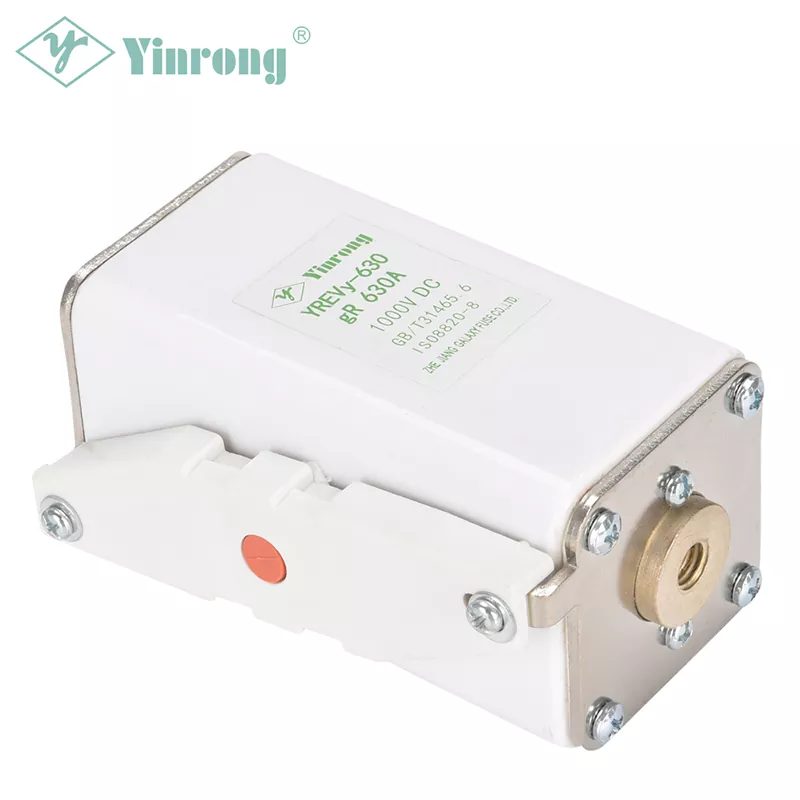
Table of Contents
- What Is an EV and HEV Power Fuse?
- Why Is an EV and HEV Power Fuse Critical in High-Voltage Systems?
- How Does an EV and HEV Power Fuse Work?
- Key Applications of EV and HEV Power Fuses
- Technical Specifications and Performance Parameters
- How to Choose the Right EV and HEV Power Fuse?
- Compliance, Standards, and Reliability
- Why Engineers Trust Yinrong for EV and HEV Power Fuse Solutions
- Frequently Asked Questions (FAQ)
What Is an EV and HEV Power Fuse?
An EV and HEV Power Fuse is a specially engineered overcurrent protection device designed for high-voltage, high-current environments found in electric vehicles (EVs) and hybrid electric vehicles (HEVs). Unlike conventional automotive fuses, these power fuses are built to safely interrupt fault currents in systems that can exceed hundreds of volts DC.
At Yinrong, power fuses for EV and HEV platforms are designed to protect essential components such as battery packs, inverters, DC-DC converters, and onboard chargers. Their primary function is to isolate faults quickly, preventing thermal runaway, electrical fires, and irreversible component damage.
Why Is an EV and HEV Power Fuse Critical in High-Voltage Systems?
High-voltage architectures introduce significant safety risks if not properly protected. The EV and HEV Power Fuse plays a critical role in mitigating these risks by:
- Interrupting short-circuit and overload currents
- Protecting lithium-ion battery systems
- Ensuring passenger and vehicle safety
- Reducing system downtime and maintenance costs
Without a reliable fuse, even a minor fault can cascade into catastrophic failure. This is why automotive OEMs increasingly specify advanced fuse solutions from trusted manufacturers like Yinrong.
How Does an EV and HEV Power Fuse Work?
The operating principle of an EV and HEV Power Fuse is based on controlled thermal and electrical interruption. When current exceeds the rated threshold, the fuse element heats rapidly and melts, breaking the circuit.
What sets EV/HEV fuses apart is their ability to handle:
- High DC voltages (up to 1000V or more)
- Extremely fast fault current rise times
- Arc suppression in sealed environments
Yinrong integrates advanced arc-quenching materials and precision-engineered fuse elements to ensure predictable and reliable performance under extreme conditions.
Key Applications of EV and HEV Power Fuses
The EV and HEV Power Fuse is widely used across multiple subsystems within electric vehicles:
| Application Area | Function of the Power Fuse |
|---|---|
| Battery Pack Protection | Prevents overcurrent and short-circuit damage |
| Inverter Systems | Protects power electronics from fault currents |
| DC-DC Converters | Ensures stable voltage conversion |
| Onboard Chargers | Safeguards charging circuits |
Technical Specifications and Performance Parameters
When evaluating an EV and HEV Power Fuse, engineers focus on several key parameters:
- Rated voltage and current
- Breaking capacity
- Time-current characteristics
- Operating temperature range
- Mechanical durability
Yinrong designs its fuse portfolio to meet the demanding electrical and environmental requirements of modern EV platforms, ensuring consistent performance throughout the vehicle lifecycle.
How to Choose the Right EV and HEV Power Fuse?
Selecting the correct EV and HEV Power Fuse requires a system-level understanding of the application. Key considerations include:
- Maximum system voltage and current
- Expected fault current levels
- Installation space and mounting method
- Thermal management conditions
Working with an experienced manufacturer like Yinrong allows engineers to optimize fuse selection and ensure compliance with OEM design requirements.
Compliance, Standards, and Reliability
An EV and HEV Power Fuse must comply with international automotive and electrical standards such as IEC, ISO, and UL. Reliability testing often includes:
- Thermal cycling
- Vibration and shock testing
- High-voltage insulation verification
Yinrong maintains strict quality control and testing protocols to deliver fuse solutions that meet global regulatory expectations.
Why Engineers Trust Yinrong for EV and HEV Power Fuse Solutions
With extensive experience in circuit protection technology, Yinrong has established itself as a reliable partner in the electric vehicle supply chain. Engineers choose Yinrong because of:
- Specialized focus on EV and HEV power protection
- Consistent product quality and performance
- Application-driven engineering support
By continuously investing in innovation, Yinrong ensures its EV and HEV Power Fuse solutions evolve alongside next-generation vehicle architectures.
Frequently Asked Questions (FAQ)
What makes an EV and HEV Power Fuse different from a standard automotive fuse?
An EV and HEV Power Fuse is designed for high-voltage DC systems and has much higher breaking capacity and arc suppression capability than traditional fuses.
Can one EV and HEV Power Fuse be used across different vehicle platforms?
While some fuses are versatile, proper selection depends on system voltage, current, and fault levels. Consulting Yinrong ensures optimal matching.
How often should an EV and HEV Power Fuse be replaced?
Power fuses are maintenance-free under normal conditions and only need replacement after a fault event.
Conclusion and Call to Action
As electric vehicles continue to redefine transportation, the importance of reliable circuit protection cannot be overstated. The EV and HEV Power Fuse is a cornerstone of safe, efficient, and durable high-voltage systems. With proven expertise and a commitment to quality, Yinrong delivers solutions that engineers can trust.
If you are looking for a dependable EV and HEV Power Fuse tailored to your application, we invite you to contact us today. Reach out to Yinrong to discuss your project requirements and discover how our power fuse solutions can support your next-generation EV designs.