- English
- Español
- Português
- русский
- Français
- 日本語
- Deutsch
- tiếng Việt
- Italiano
- Nederlands
- ภาษาไทย
- Polski
- 한국어
- Svenska
- magyar
- Malay
- বাংলা ভাষার
- Dansk
- Suomi
- हिन्दी
- Pilipino
- Türkçe
- Gaeilge
- العربية
- Indonesia
- Norsk
- تمل
- český
- ελληνικά
- український
- Javanese
- فارسی
- தமிழ்
- తెలుగు
- नेपाली
- Burmese
- български
- ລາວ
- Latine
- Қазақша
- Euskal
- Azərbaycan
- Slovenský jazyk
- Македонски
- Lietuvos
- Eesti Keel
- Română
- Slovenski
- मराठी
- Srpski језик

How Can the Right AC Industrial Fuse Reduce Downtime and Protect Critical Equipment?
Abstract
Choosing an AC Industrial Fuse sounds simple until an overload trips a production line, a replacement does not match the system, or a buyer realizes too late that a low-cost part created a high-cost failure. In real industrial environments, fuse selection affects equipment safety, maintenance frequency, spare-parts planning, and the speed of recovery after a fault. This article explains how to evaluate an AC Industrial Fuse from a buyer’s perspective, what technical points actually matter in day-to-day operation, and how businesses can avoid the most common purchasing mistakes. It also looks at application differences, comparison factors, practical selection logic, and the support value a manufacturer such as Zhejiang Galaxy Fuse Co., Ltd. can provide when customers need dependable circuit protection.
Contents
- Outline
- What makes fuse selection such a common pain point?
- What does an AC Industrial Fuse actually do in a working system?
- Why does the wrong fuse create bigger problems than most buyers expect?
- Which factors should buyers compare before choosing an AC Industrial Fuse?
- Where is an AC Industrial Fuse most commonly used?
- How can buyers compare fuse options more efficiently?
- What purchasing mistakes should be avoided?
- Why does supplier capability matter as much as product specs?
- How should maintenance teams manage fuse replacement and stock planning?
- FAQ
- Final Thoughts
Outline
- The operational risks behind poor fuse selection
- The core protection role of an AC Industrial Fuse
- The most important technical and commercial comparison points
- Typical industrial applications and purchasing scenarios
- Common buying errors that lead to downtime or repeat orders
- How better supplier support improves long-term reliability
What makes fuse selection such a common pain point?
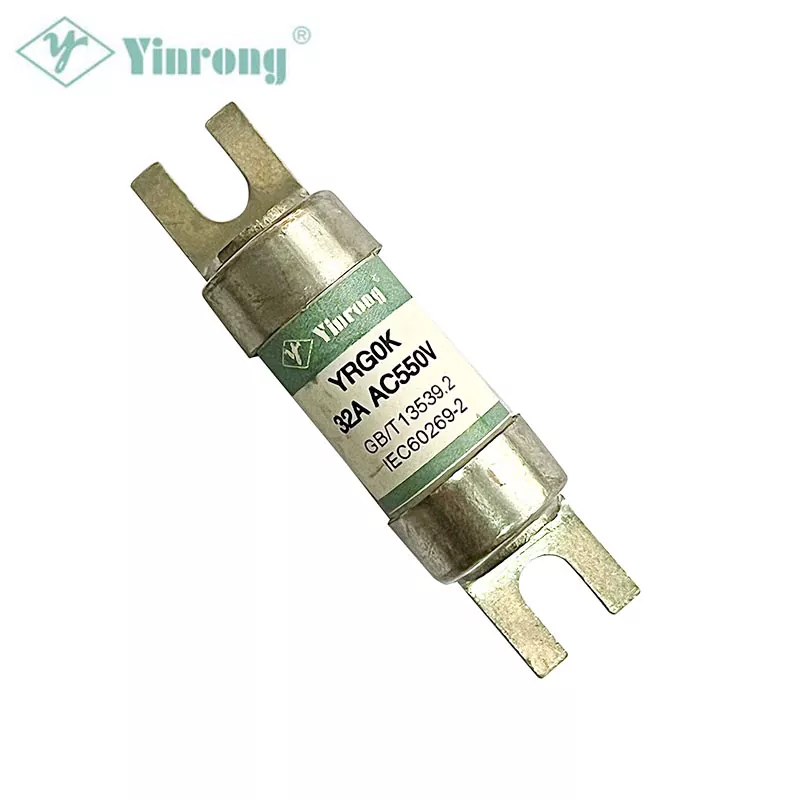
Many buyers do not struggle because fuses are mysterious. They struggle because fuse decisions are often made under pressure. A line needs to restart. A panel builder needs parts that fit an established design. A maintenance team wants a replacement that works immediately without forcing a redesign. Meanwhile, procurement wants stable supply, clear specifications, and fewer complaints from the site.
That is exactly where the conversation around an AC Industrial Fuse becomes more serious than it first appears. A fuse is a protective component, but it also influences response speed during faults, compatibility with existing holders or disconnectors, maintenance safety, and the total cost of keeping electrical systems running. When the wrong part is installed, the result may be nuisance operation, inadequate protection, unnecessary troubleshooting, or even damage to equipment that should have been protected in the first place.
For that reason, buyers are usually not asking one simple question. They are asking several at once: Will this fuse match my voltage and current requirements? Will it protect sensitive equipment properly? Can my technicians replace it safely? Will I be able to source it again later? A good article on this subject needs to answer those practical concerns, not just repeat a catalog description.
What does an AC Industrial Fuse actually do in a working system?
An AC Industrial Fuse is designed to interrupt excessive current before that current causes wider damage to cables, control circuits, switchgear, distribution equipment, or connected machinery. In daily operation, that means the fuse stands between a fault and a much more expensive failure.
In industrial power systems, faults do not happen at convenient times. They may be caused by short circuits, overload conditions, aging components, installation errors, vibration, contamination, or sudden stress during machine startup. When current rises beyond safe limits, the fuse reacts by breaking the circuit. That interruption protects downstream equipment and limits the spread of damage.
In practical terms, the fuse does three things buyers care about most:
- It protects valuable equipment from fault current.
- It helps isolate the problem faster during maintenance.
- It reduces the risk of prolonged downtime and repair costs.
That is why industrial users do not treat a fuse as a throwaway accessory. They treat it as part of a protection strategy. When selected correctly, it supports system continuity. When selected poorly, it becomes the weak point everyone notices only after something goes wrong.
Why does the wrong fuse create bigger problems than most buyers expect?
A surprising number of purchasing problems come from viewing all fuses as roughly interchangeable. They are not. Even when two products look similar, differences in rating, breaking capacity, class, physical size, and application fit can produce very different outcomes.
Here is the real issue: buyers usually feel the consequences of the wrong fuse indirectly. They may see repeated shutdowns, inconsistent protection, heat-related problems, difficult replacement procedures, or shorter equipment life. The fuse itself may not seem dramatic, but the impact spreads through the system.
Consider the following comparison:
| Situation | What Happens with a Suitable Fuse | What Happens with an Unsuitable Fuse |
|---|---|---|
| Short-circuit event | Fault current is interrupted quickly and damage is limited | Protection may be delayed or insufficient, increasing damage risk |
| Routine replacement | Maintenance staff can identify and replace the fuse efficiently | Size or rating mismatch causes confusion, delay, or incorrect substitution |
| Long-term operation | System protection remains consistent and predictable | Nuisance failures or weak protection create recurring service problems |
| Procurement planning | Spare stock is standardized and easier to manage | Too many non-standard items increase inventory complexity |
This is why cost-only buying tends to fail. A lower price on paper can lead to higher operating expense later if the fuse does not perform the way the system requires.
Which factors should buyers compare before choosing an AC Industrial Fuse?
Buyers usually get better results when they compare the application first and the product second. In other words, start from the job the fuse has to do, then narrow down the correct product family. That sounds obvious, but in real purchasing workflows, people often do the opposite.
The most useful comparison factors include:
- Voltage rating — The fuse must match or exceed the operating voltage of the system.
- Current rating — The selected rating should fit normal operating conditions without compromising fault protection.
- Breaking capacity — This determines the fuse’s ability to safely interrupt high fault currents.
- Application class — Different circuits need different protection behavior.
- Physical size and mounting style — Mechanical compatibility matters just as much as electrical compatibility.
- Thermal environment — Panel heat, ambient conditions, and duty cycle can affect performance.
- Replacement convenience — Easy identification and safe handling reduce maintenance time.
- Supply stability — Buyers should confirm whether the product can be sourced consistently over time.
It also helps to ask a blunt internal question: Is this fuse protecting a low-cost replaceable circuit, or is it protecting equipment that would be expensive and disruptive to lose? The answer changes how cautious the selection process should be.
Where is an AC Industrial Fuse most commonly used?
An AC Industrial Fuse is widely used in power distribution, cable protection, low-voltage distribution assemblies, industrial control systems, and equipment that requires dependable protection against overcurrent and short-circuit events. The exact product format may vary, but the operational goal remains the same: stop a fault from becoming a wider system failure.
Common use cases include:
- Factory distribution panels
- Motor-related control systems
- Industrial switchgear assemblies
- Cable and feeder protection
- Control cabinets in automated production lines
- General low-voltage industrial power systems
Some buyers also need product families that cover different physical forms or standards, especially when they serve multiple export markets or maintain legacy systems. That is why a supplier with broader product coverage can be valuable. The referenced product page from Zhejiang Galaxy Fuse Co., Ltd. presents AC industrial fuse offerings that include NH knife-blade HRC fuse, cylindrical fuse, J type slotted fuse, house service cut out fuse, NT knife-blade HRC fuse, and fuse type disconnectors, indicating a product range aimed at varied industrial protection needs. :contentReference[oaicite:1]{index=1}
How can buyers compare fuse options more efficiently?
The fastest way to compare options is to use a structured decision table instead of relying on vague descriptions like “standard,” “heavy duty,” or “high quality.” Those phrases sound reassuring, but they do not help a buyer avoid mismatch.
| Comparison Point | Why It Matters | Buyer Question to Ask |
|---|---|---|
| Electrical rating | Defines whether the fuse suits the operating conditions | Does this match my system voltage and normal load profile? |
| Fault protection capability | Determines how safely the fuse handles abnormal current | Can it interrupt the fault level my system may face? |
| Physical dimensions | Affects installation and replacement | Will it fit the holder, base, or disconnector I already use? |
| Application suitability | Improves protection performance for the actual circuit type | Is this intended for distribution, cable, control, or other use? |
| Availability | Reduces future purchasing friction | Can I reorder this quickly and consistently? |
| Technical support | Helps avoid selection mistakes | Will the supplier help confirm the right model before I buy? |
This method is especially useful for distributors, panel builders, and OEM buyers who deal with repeat orders. It reduces subjective decisions and makes the final choice easier to justify internally.
What purchasing mistakes should be avoided?
There are a few errors that come up repeatedly in industrial fuse purchasing, and most of them are avoidable.
- Buying by appearance only — Similar-looking fuse types may behave differently in service.
- Choosing only by price — A cheaper component can become the expensive option after one failure event.
- Ignoring installation compatibility — Electrical ratings alone are not enough if the fuse does not fit the existing hardware.
- Overlooking future reorder needs — A product that solves today’s problem but cannot be sourced consistently creates tomorrow’s problem.
- Skipping application confirmation — A fuse selected without understanding the circuit can lead to underperformance or overprotection issues.
One of the smartest habits a buyer can develop is documenting the original application context. Instead of just recording a part number, record the equipment type, operating environment, voltage, current, and replacement reason. That makes future purchasing more accurate and far less dependent on memory.
Why does supplier capability matter as much as product specs?
Even when a buyer understands the technical side, supplier capability still matters. Industrial buyers are not only purchasing a product. They are purchasing consistency, traceability, response speed, and confidence in future supply.
A capable supplier helps in several ways:
- Clarifying product selection when the application is complex
- Providing a broader range for different industrial scenarios
- Supporting repeat ordering and inventory planning
- Reducing communication gaps between engineering and procurement teams
- Improving response time when urgent replacement is needed
Zhejiang Galaxy Fuse Co., Ltd. presents itself on its product page as a manufacturer associated with AC industrial fuse solutions and multiple related fuse formats for industrial protection needs. That kind of range is useful for buyers who want to reduce sourcing fragmentation and work with a supplier that understands practical application differences. :contentReference[oaicite:2]{index=2}
How should maintenance teams manage fuse replacement and stock planning?
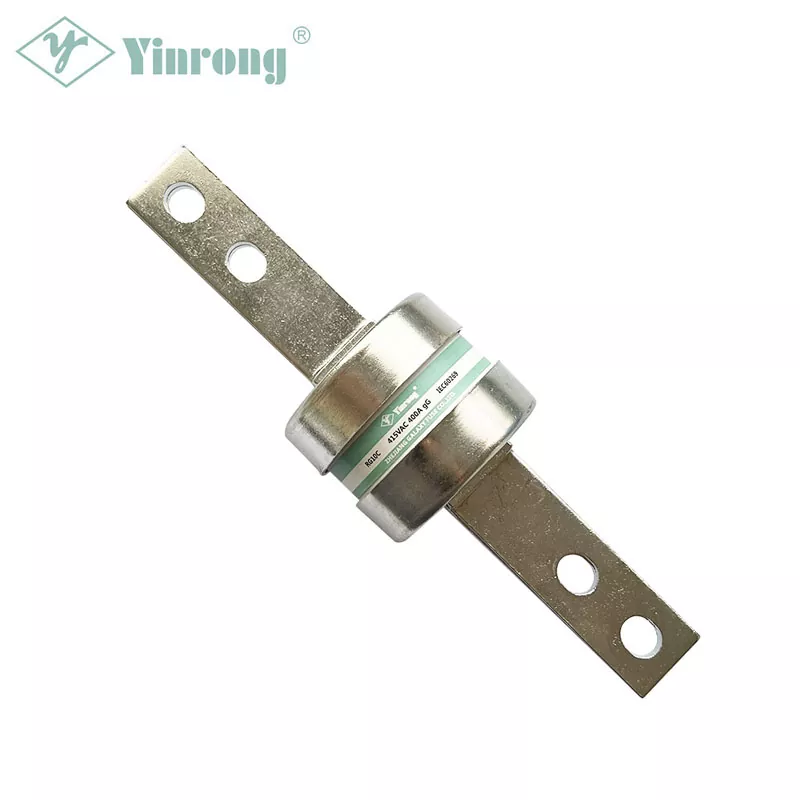
Good fuse selection should continue after the first purchase. Maintenance teams benefit when procurement and engineering treat replacement planning as part of reliability management rather than an afterthought.
A practical approach includes:
- Standardize approved fuse models wherever possible.
- Keep a clear cross-reference list for each protected circuit.
- Store frequently used ratings in controlled spare stock.
- Train technicians to verify both electrical and physical compatibility before replacement.
- Review repeated fuse operations to identify deeper system problems rather than simply replacing the part again.
This matters because a fuse that opens repeatedly may be doing its job correctly. The real issue may be upstream or downstream. Treating every blown fuse as an isolated event can hide a larger reliability problem.
When buyers, maintenance staff, and suppliers coordinate well, the result is not just better protection. It is faster diagnosis, cleaner stock management, and fewer stressful emergency purchases.
FAQ
What is the main purpose of an AC Industrial Fuse?
Its main purpose is to protect electrical circuits and connected equipment from excessive current, short circuits, and related fault conditions by interrupting the circuit before wider damage occurs.
Which industries commonly use an AC Industrial Fuse?
They are commonly used in manufacturing, power distribution, control systems, low-voltage assemblies, machinery protection, and general industrial electrical infrastructure.
Can I replace one fuse with any model that has the same current rating?
No. Current rating alone is not enough. Voltage rating, breaking capacity, application type, and physical compatibility also need to be checked carefully.
Why does fuse size matter so much?
Because even a correctly rated fuse may be unusable if it does not fit the holder, base, or disconnector already installed in the system.
How can I reduce purchasing risk when sourcing fuses?
Work from the application requirements first, confirm both electrical and dimensional compatibility, and choose a supplier that can support repeat orders and technical clarification.
What should buyers remember before making a final decision?
The right AC Industrial Fuse is not simply the one that meets a basic rating on paper. It is the one that fits the application, protects the equipment reliably, supports safe maintenance, and remains available when the next order is needed. That is what reduces downtime, protects assets, and makes purchasing decisions easier to defend.
If you are comparing options for industrial circuit protection and want a more dependable path from selection to supply, Zhejiang Galaxy Fuse Co., Ltd. is worth evaluating as part of your sourcing process. For product guidance, application matching, or quotation support tailored to your project requirements, contact us and start the conversation with a team that understands what industrial buyers actually need.
Previous:No News