- English
- Español
- Português
- русский
- Français
- 日本語
- Deutsch
- tiếng Việt
- Italiano
- Nederlands
- ภาษาไทย
- Polski
- 한국어
- Svenska
- magyar
- Malay
- বাংলা ভাষার
- Dansk
- Suomi
- हिन्दी
- Pilipino
- Türkçe
- Gaeilge
- العربية
- Indonesia
- Norsk
- تمل
- český
- ελληνικά
- український
- Javanese
- فارسی
- தமிழ்
- తెలుగు
- नेपाली
- Burmese
- български
- ລາວ
- Latine
- Қазақша
- Euskal
- Azərbaycan
- Slovenský jazyk
- Македонски
- Lietuvos
- Eesti Keel
- Română
- Slovenski
- मराठी
- Srpski језик

Why Is the 195×525mm XRNP High Voltage Current-Limiting Fuse Essential for Reliable High-Voltage Protection Systems
In modern medium- and high-voltage electrical networks, reliable circuit protection is critical for maintaining equipment safety, reducing downtime, and preventing catastrophic failures. The 195×525mm XRNP High Voltage Current-Limiting Fuse is specifically engineered to provide fast fault interruption, excellent current-limiting performance, and dependable protection for transformers, switchgear, capacitor banks, and other high-voltage applications. This article explores the structure, working principle, technical advantages, applications, selection criteria, maintenance considerations, and reasons why professionals trust Yinrong products for demanding power distribution environments.
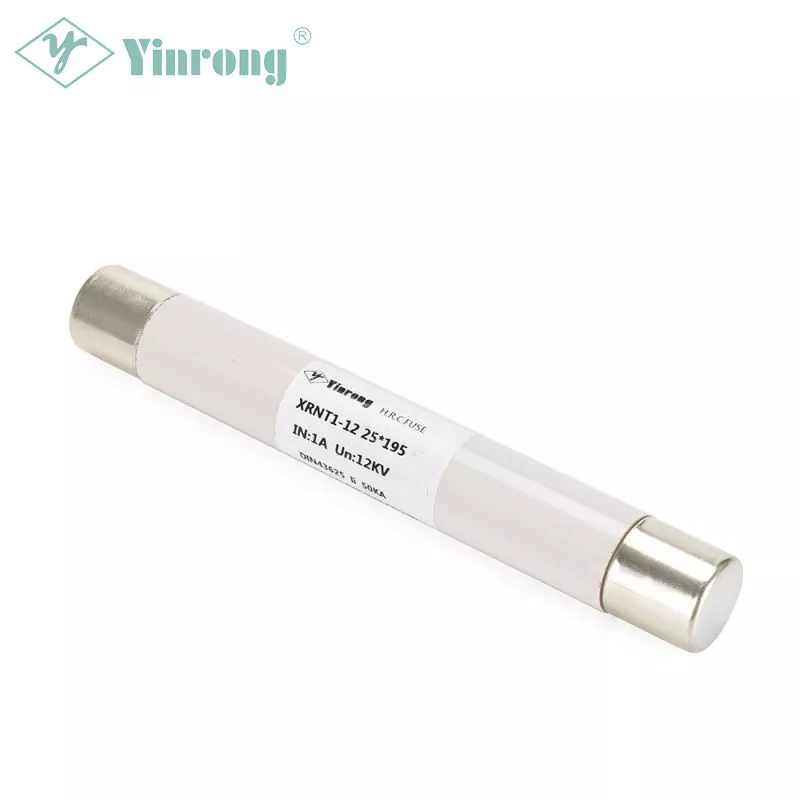
Table of Contents
- What Is a 195×525mm XRNP High Voltage Current-Limiting Fuse?
- How Does the XRNP Fuse Work?
- Key Features and Advantages
- Typical Technical Specifications
- Major Application Scenarios
- XRNP Fuse vs Conventional Protection Devices
- How to Select the Right XRNP Fuse
- Installation and Maintenance Tips
- Benefits for Power System Operators
- Future Trends in High-Voltage Protection
- Frequently Asked Questions
- Conclusion
What Is a 195×525mm XRNP High Voltage Current-Limiting Fuse?
As power systems become increasingly complex, circuit protection devices must provide faster and more reliable fault interruption capabilities. The Yinrong 195×525mm XRNP High Voltage Current-Limiting Fuse is designed to protect electrical equipment from short circuits and excessive fault currents in medium- and high-voltage systems.
The XRNP series belongs to the category of high-voltage current-limiting fuses, which means it can interrupt fault currents before they reach their maximum peak value. This significantly reduces thermal and mechanical stress on connected equipment.
The fuse typically consists of:
- High-strength ceramic fuse body
- Silver fuse elements
- Quartz sand arc-quenching medium
- Precision-designed end caps
- High dielectric insulation structure
The 195×525mm dimension refers to the physical size of the fuse body, making it suitable for specific high-voltage switchgear and protection assemblies.
How Does the XRNP Fuse Work?
The operating principle of the XRNP High Voltage Current-Limiting Fuse is based on rapid fault detection and arc suppression.
When a fault current exceeds the designed threshold:
- The fuse element heats rapidly.
- The silver element melts at specific weak points.
- An electric arc forms within the fuse body.
- Quartz sand absorbs heat and extinguishes the arc.
- The circuit is interrupted before the fault current reaches its maximum peak.
This process occurs within milliseconds, minimizing damage to transformers, switchgear, cables, and other expensive electrical assets.
Key Features and Advantages
Exceptional Current-Limiting Performance
The XRNP fuse limits fault current at an extremely early stage, protecting downstream equipment from excessive energy exposure.
High Breaking Capacity
Designed for demanding industrial environments, the fuse can safely interrupt very high short-circuit currents.
Fast Fault Clearance
Rapid interruption significantly reduces equipment damage and system downtime.
Excellent Arc Quenching Ability
High-purity quartz sand effectively absorbs arc energy and ensures safe operation.
Compact and Reliable Design
The fuse offers a compact structure while maintaining excellent electrical and mechanical performance.
Long Service Life
Premium materials and precise manufacturing help ensure dependable long-term operation.
Typical Technical Specifications
| Parameter | Description |
|---|---|
| Product Type | XRNP High Voltage Current-Limiting Fuse |
| Dimensions | 195×525 mm |
| Rated Voltage | High Voltage Applications |
| Fuse Body Material | High-Strength Ceramic |
| Fuse Element | Silver Alloy |
| Arc Quenching Medium | High-Purity Quartz Sand |
| Protection Function | Short Circuit and Overcurrent Protection |
| Installation Environment | Indoor High-Voltage Equipment |
| Application Areas | Transformers, Switchgear, Capacitor Banks |
Actual ratings and specifications may vary according to project requirements and system designs.
Major Application Scenarios
The 195×525mm XRNP High Voltage Current-Limiting Fuse is widely used across multiple industries.
Transformer Protection
Transformers represent significant investments within power distribution networks. XRNP fuses help prevent damage caused by internal faults and external short circuits.
Switchgear Systems
Modern switchgear requires reliable protection devices capable of handling severe fault conditions. XRNP fuses provide rapid isolation of faulted circuits.
Capacitor Banks
Capacitor installations often experience transient conditions and fault currents that require fast interruption capabilities.
Industrial Power Distribution
Manufacturing facilities rely on continuous power supply. High-voltage current-limiting fuses help maintain system reliability.
Renewable Energy Infrastructure
Wind farms and solar substations increasingly use high-performance protection devices to ensure stable operation.
Utility Substations
Electrical utilities employ XRNP fuses to safeguard critical distribution equipment.
XRNP Fuse vs Conventional Protection Devices
| Feature | XRNP Current-Limiting Fuse | Conventional Fuse | Circuit Breaker |
|---|---|---|---|
| Response Speed | Extremely Fast | Moderate | Slower |
| Current Limitation | Excellent | Limited | Moderate |
| Maintenance | Low | Low | Higher |
| Cost Efficiency | High | Medium | Higher Initial Cost |
| Breaking Capacity | Very High | Lower | High |
For many high-voltage applications, XRNP fuses offer an ideal balance between performance, safety, and cost-effectiveness.
How to Select the Right XRNP Fuse
Selecting the correct fuse is essential for optimal system protection.
Consider the following factors:
- System rated voltage
- Maximum operating current
- Prospective short-circuit current
- Transformer capacity
- Equipment protection requirements
- Environmental conditions
- Installation compatibility
- Industry standards compliance
Consulting with experienced fuse manufacturers can help ensure proper product selection.
Installation and Maintenance Tips
Proper Installation Practices
- Verify voltage and current ratings before installation.
- Inspect the fuse for transportation damage.
- Ensure secure mounting connections.
- Follow manufacturer installation instructions.
- Use appropriate personal protective equipment.
Routine Maintenance Recommendations
- Conduct periodic visual inspections.
- Check for overheating signs.
- Inspect terminal connections.
- Replace operated fuses promptly.
- Maintain clean operating environments.
Routine inspections can significantly improve overall system reliability.
Benefits for Power System Operators
Power system operators face increasing pressure to improve reliability while minimizing operational costs.
The XRNP fuse delivers several key benefits:
- Reduced equipment damage
- Lower maintenance expenses
- Improved personnel safety
- Enhanced system uptime
- Better fault coordination
- Extended equipment lifespan
- Reduced outage risks
- Higher operational efficiency
These advantages contribute directly to improved overall network performance.
Future Trends in High-Voltage Protection
The electrical power industry continues to evolve rapidly.
Several trends are shaping future protection technologies:
- Smart grid development
- Renewable energy integration
- Digital monitoring systems
- Advanced fault diagnostics
- Higher energy efficiency requirements
- Compact substation designs
- Improved protection coordination
Despite advances in digital protection, high-quality current-limiting fuses remain an essential component of comprehensive protection strategies.
Frequently Asked Questions
1. What is the primary function of the 195×525mm XRNP High Voltage Current-Limiting Fuse?
Its primary purpose is to protect high-voltage electrical equipment from short circuits and excessive fault currents by interrupting the circuit rapidly and safely.
2. Why is current-limiting technology important?
Current-limiting technology reduces the peak fault current reaching equipment, minimizing thermal and mechanical damage.
3. Where is the XRNP fuse commonly installed?
It is commonly used in transformer protection systems, switchgear assemblies, capacitor banks, substations, and industrial power distribution networks.
4. What materials are used inside the fuse?
The fuse typically contains silver fuse elements, high-strength ceramic housing, and high-purity quartz sand for arc suppression.
5. How often should XRNP fuses be inspected?
Inspection schedules depend on operating conditions, but routine visual inspections during maintenance cycles are recommended.
6. Can XRNP fuses improve equipment lifespan?
Yes. By limiting fault energy and preventing severe electrical damage, XRNP fuses can help extend the service life of valuable electrical assets.
7. Why choose Yinrong high-voltage fuse solutions?
Yinrong focuses on high-quality fuse manufacturing, advanced production processes, strict quality control, and reliable electrical protection solutions for global power system applications.
Conclusion
The 195×525mm XRNP High Voltage Current-Limiting Fuse plays a crucial role in protecting modern high-voltage electrical systems from destructive fault currents. Its rapid response speed, superior current-limiting capability, high breaking capacity, and dependable performance make it an ideal choice for transformer protection, switchgear applications, utility substations, industrial facilities, and renewable energy projects. As power infrastructure continues to expand and modernize, dependable protection devices like XRNP fuses remain essential for ensuring safety, reliability, and operational continuity.
If you are looking for a trusted supplier of high-performance high-voltage protection products, Yinrong offers professional solutions tailored to a wide range of electrical applications. Whether you need technical guidance, product recommendations, or customized protection solutions, contact us today to discuss your project requirements and discover how our expertise can help improve the safety and reliability of your power systems.